Buying Property in Oman: ITC Guide for Foreigners 2026
Foreigners can only buy freehold in Oman's Integrated Tourism Complexes. ITC list, 3% transfer fee, OMR 250k and 500k residency visas, and the 2028 income tax.
By Dune Estates Editorial · Updated August 23, 2026 · 12 min read
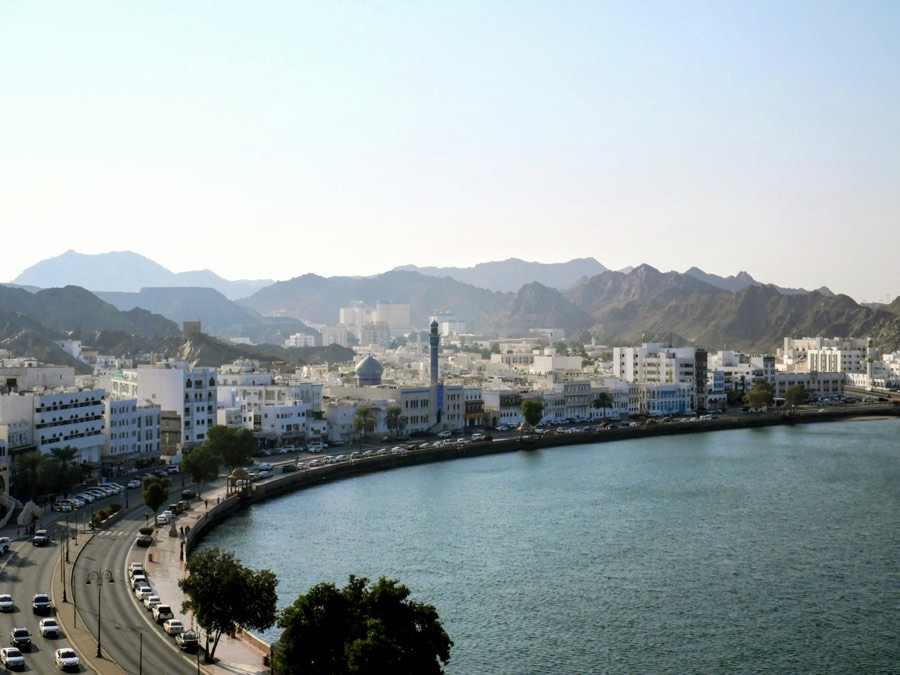
Where foreigners can buy in Oman
Foreigners can buy freehold property in Oman only inside Integrated Tourism Complexes, known as ITCs. That is the whole rule, and it is not a soft guideline.
Residential land outside ITCs is reserved for Omani citizens. There is no workaround through a company structure that the registry supports, and anyone offering one should be checked with an Omani lawyer before you send money.
The ITC framework was designed to open a controlled part of the market to foreign capital while keeping the general housing stock in national hands. In practice it means your shortlist is a list of named developments rather than a map of the country.
Established ITCs:
- Al Mouj Muscat, the country’s first ITC
- Muscat Hills
- Muscat Bay
- Jebel Sifah
- Hawana Salalah
- AIDA, within the Yiti masterplan
- Saraya Bandar Jissah
New ITCs at Al Qurm and Al Bustan were announced in March 2026.
The list expands over time, so verify the current status of any development with the Ministry of Housing and Urban Planning or your lawyer before you commit. A project described as “ITC-approved” in a brochure is a claim, not a registration.
What you actually own
Ownership inside an ITC is freehold, or usufruct for up to 99 years, with the full right to sell, rent out and pass the property on by inheritance.
That is a meaningful set of rights, and it is stronger than the leasehold arrangements foreign buyers encounter in some other markets. The restriction is on where you can buy, not on what you own once you have bought.
| Right | Position inside an ITC |
|---|---|
| Tenure | Freehold, or usufruct up to 99 years |
| Right to sell | Yes |
| Right to rent out | Yes |
| Right to inherit | Yes |
| Residency | Granted for owner plus immediate family |
| Location restriction | ITCs only, residential land outside is for Omani citizens |
Residency through property
An ITC purchase grants residency for the owner and immediate family, and two investor visa tiers sit on top of that, keyed to property value.
| Visa tier | Property threshold | Term | Renewable |
|---|---|---|---|
| Investor Residency (often called Silver) | OMR 250,000 or more in an ITC | 5 years | Yes |
| Golden tier | OMR 500,000 or more | 10 years | Yes |
Conditions for both: the applicant must be 21 or over, financially solvent, and have a clean record. Spouse and children are included.
At the Central Bank of Oman peg of 1 OMR to USD 2.6008, the thresholds are roughly USD 650,000 and USD 1.3 million. That places Oman’s 10-year route above the UAE Golden Visa threshold of AED 2 million, which is about USD 545,000 at the fixed AED peg of 3.6725, while the 5-year route sits above it too. Oman is not the cheaper residency, and buyers who assume otherwise are usually comparing the wrong tiers. Our UAE versus Oman comparison puts the entry costs and thresholds side by side.
Where Oman differs is in what you get for the money: lower density, a marina and golf lifestyle at Al Mouj rather than a high-rise skyline, and a market with far fewer buyers competing for the same unit.
Fees and transaction costs
The transfer and registration fee charged by the Ministry of Housing and Urban Planning is 3% of property value for foreigners.
Omani citizens pay 1%, reduced from 2% in January 2025. Transactions financed through Islamic banks are charged 0.5%. There is no separate stamp duty, because it is included in this fee.
| Buyer or transaction type | Transfer and registration fee |
|---|---|
| Foreign buyer | 3% of property value |
| Omani citizen | 1% (reduced from 2% in January 2025) |
| Islamic-bank transaction | 0.5% |
| Separate stamp duty | None, included in the above |
Compare that with the region: Dubai charges a 4% DLD transfer fee, Abu Dhabi charges 2% under Executive Council Resolution No. 49 of 2018. Oman’s 3% for foreigners sits between them.
Other transaction costs, including legal fees, developer administration charges and any service charge advance, are not in our source registry and vary by development. Ask the developer for a written breakdown and have your lawyer confirm it before the reservation payment.
Taxes now and from 2028
Oman currently has no personal income tax, including on rental income earned by individuals. That changes on 1 January 2028.
From that date Oman introduces the first personal income tax in the GCC: a 5% flat rate on income above OMR 42,000 per year. Rental income is inside the taxable scope. Non-residents are taxed only on Oman-source income. For non-resident rental income there is a 5% withholding on gross, unless a tax treaty applies.
| Period | Personal income tax position |
|---|---|
| Now to end of 2027 | No personal income tax, including on individuals’ rental income |
| From 1 January 2028 | 5% flat on income above OMR 42,000 per year; rental income included |
| Non-residents from 2028 | Taxed on Oman-source income only; 5% withholding on gross rental unless a treaty applies |
This is the single biggest planning point for anyone buying in Oman for income. A yield modelled on today’s zero-tax position needs a second version for 2028 onward. Whether a treaty reduces or removes the withholding in your case depends on your country of residence, so confirm with your tax adviser rather than assuming.
For contrast, the UAE has no annual property tax, no capital gains tax on residential property for individuals, and no personal income tax on rental income from personally owned residential property, with no equivalent change announced.
Yields and pricing: the Al Mouj reference
Al Mouj Muscat is the country’s first ITC and the clearest pricing reference for foreign buyers, with one-bedroom apartments from around OMR 110,000 and larger or sea-view units reaching OMR 450,000 and above.
Gross yields there typically run about 5% to 7%.
The development is the master development known as Al Mouj Muscat, previously The Wave Muscat. Its character is a premier waterfront community: a marina, an 18-hole golf course, roughly 6 km of beaches, parks, and a retail and dining promenade.
Set the numbers against the visa tiers and the picture is straightforward. An entry one-bedroom at around OMR 110,000 does not reach either investor visa threshold. To clear OMR 250,000 for the five-year visa you are into larger apartments or villas. To clear OMR 500,000 for the ten-year visa you are at the upper end of the development.
| Reference point | Figure |
|---|---|
| Al Mouj 1BR apartments from | ~OMR 110,000 |
| Larger and sea-view units up to | OMR 450,000+ |
| Typical gross yield | ~5% to 7% |
| 5-year visa threshold | OMR 250,000 |
| 10-year visa threshold | OMR 500,000 |
Our Al Mouj Muscat property guide covers the community in detail. Pricing in other ITCs is not verified in our source registry, so treat any figure you are quoted elsewhere as a developer claim until your broker confirms it against recorded transactions.
How the buying process runs
The sequence is: confirm the development is a registered ITC, verify the developer, reserve the unit, sign the contract, pay per the agreed schedule, register with the Ministry of Housing and Urban Planning and pay the 3% fee, then take handover and apply for residency if the value qualifies.
Confirm ITC status. This is the check that has no substitute. Ask for the registration and have your lawyer verify it independently.
Verify the developer. Ask for completed phases you can visit, the delivery record on previous phases of the same ITC, and what protection exists for buyer funds during construction. Oman’s arrangements for off-plan buyer funds are not covered in our source registry, so this is a question for your lawyer against the specific contract rather than an assumption carried over from Dubai’s escrow regime under Law No. 8 of 2007.
Reserve and contract. Read the payment schedule, the completion date, the specification, the area tolerance and the remedies for delay. Get the contract reviewed before you sign it.
Register and pay the fee. The 3% transfer and registration fee goes to the Ministry of Housing and Urban Planning.
Handover. Inspect against the contract specification, log defects, settle the final payment, take the title.
Residency application. If the property value reaches OMR 250,000 or OMR 500,000, apply for the corresponding investor visa. The applicant must be 21 or over, solvent and clean-record, with spouse and children included.
Who Oman suits, and who it does not
Oman suits buyers who want a low-density coastal lifestyle with residency attached, and who are buying for the long hold rather than for turnover.
It fits you if you value marina and golf living, want a quieter market than the UAE, are comfortable with a small pool of eligible developments, and are planning to hold through the 2028 tax change with that cost already modelled.
It fits less well if you need liquidity, if you want a large choice of projects and developers, if your budget is at the entry level and residency is the main goal, or if you are optimising purely for gross yield. Dubai’s mid-market communities run at roughly 6% to 8% gross with JVC at 7.7% to 8.5%, above Al Mouj’s typical 5% to 7%, and the UAE has no personal income tax on rental income with no change announced.
The honest summary: Oman is a lifestyle and diversification play with a residency benefit, not a yield-maximising one. Compare it directly against the UAE before deciding, using our UAE versus Oman guide, and read the Dubai off-plan buying guide or the Abu Dhabi guide for foreigners if the UAE side is still open in your thinking.
Frequently Asked Questions
Yes, but only inside Integrated Tourism Complexes (ITCs). Residential land outside ITCs is reserved for Omani citizens. Established ITCs include Al Mouj Muscat, Muscat Hills, Muscat Bay, Jebel Sifah, Hawana Salalah, AIDA within the Yiti masterplan and Saraya Bandar Jissah, with new ITCs at Al Qurm and Al Bustan announced in March 2026.
Freehold, or usufruct for up to 99 years, with the full right to sell, rent out and pass the property on by inheritance. An ITC purchase also grants residency for the owner and immediate family.
The Ministry of Housing and Urban Planning charges a transfer and registration fee of 3% of property value for foreigners. Omani citizens pay 1%, reduced from 2% in January 2025, and transactions financed through Islamic banks are charged 0.5%. There is no separate stamp duty because it is included in this fee.
Property worth OMR 250,000 or more inside an ITC qualifies for a renewable 5-year investor residency visa. Property worth OMR 500,000 or more qualifies for a renewable 10-year visa. The applicant must be 21 or over, financially solvent and have a clean record, and spouse and children are included.
Not before 2028. Oman currently has no personal income tax, including on individuals' rental income. From 1 January 2028 a 5% flat personal income tax applies to income above OMR 42,000 per year, and rental income is within the taxable scope. Non-residents are taxed on Oman-source income only, with a 5% withholding on gross rental income unless a tax treaty applies. Confirm your own position with a tax adviser.
One-bedroom apartments start from around OMR 110,000, and larger or sea-view units reach OMR 450,000 and above. Typical gross yields run about 5% to 7%. Al Mouj is Oman's first ITC, with a marina, an 18-hole golf course, roughly 6 km of beaches, parks and a retail and dining promenade.
No. Oman's 5-year investor visa needs OMR 250,000 and the 10-year needs OMR 500,000, roughly USD 650,000 and USD 1.3 million at the Central Bank of Oman peg of 1 OMR to USD 2.6008. The UAE Golden Visa threshold is AED 2 million, about USD 545,000 at the fixed peg of 3.6725. Oman's advantages are lifestyle, density and diversification rather than a lower entry price.
Next steps
Confirm the ITC status of any development in writing before anything else, then verify the developer’s delivery record on completed phases you can walk through.
Model your numbers twice: once on today’s zero-tax position and once on the 2028 regime, with the 5% flat rate above OMR 42,000 and the non-resident withholding on gross rental income. If the deal only works on the first version, it is not a deal.
Then decide the tier deliberately. If residency is the objective, buy at or above OMR 250,000 or OMR 500,000 rather than near the line, since valuation and currency movement should not put your visa at risk.
Where a number is not stated in this guide, it is not verified in our source registry. Verify it with your Omani lawyer or broker before you transfer funds.
Get a personal off-plan shortlist
Tell us your budget, target city (Dubai, Abu Dhabi or Oman) and goal. We reply within one business day with matched projects and next steps.